
Did you know the Korean Alphabet, Hangul? Hangul is a highly unique script, unmatched anywhere else in the world.
And in Korea, there is hangul Day to celebrate the creation of the Korean Alphabet. Hangul Day was a public holiday until 1991, when it was stripped of its holiday status due to concerns over too many days off. However, driven by public demand for its reinstatement, it was redesignated as a public holiday in 2012 and has remained one ever since.
In 2026, The year 2026 will be the 583rd anniversary since Hangul was created.
Korean people always use Hangul, so they often take its excellence and importance for granted. Globally, however, Hangul is evaluated as one of the greatest cultural heritages in human history, possessing immense value.
So, what makes Hangul so excellent and great? Once you understand this, you will truly recognize why Hangul is celebrated as one of the greatest cultural heritages in human history.
Hangul is the only alphabet in the world whose creator and exact date of creation are clearly known
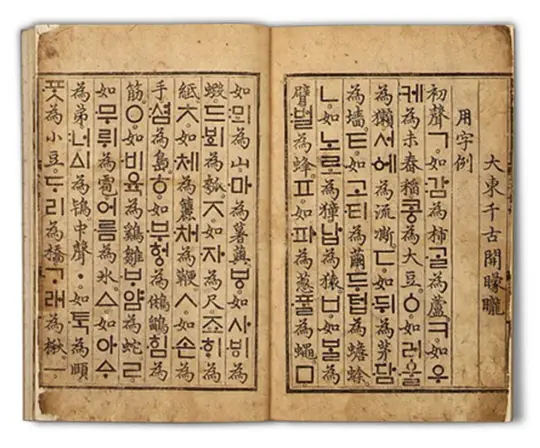
Hangul is the only writing system in the world with a clearly documented creator, exact creation date, and foundational principles and purpose. Unlike Hangul, the creators, purposes, and exact origins of other scripts—such as Chinese characters, Japanese Hiragana, and the Roman alphabet—remain unknown.
Hangul was successfully created in 1443 (the 25th year of King Sejong’s reign) and was officially published for use in 1446 (the 28th year of King Sejong’s reign). Historical records clearly state that the creators were King Sejong of the Joseon Dynasty and the scholars of Jiphyeonjeon (the Hall of Worthies). This is unprecedented in world history and can be seen as a truly groundbreaking event in human history.
Hangul is an alphabet with a clearly defined purpose of creation
The famous phrase, ‘Naratmalssami dungswege dara…’ originates from the Hunminjeongeum Haerye Edition, and it clearly defines the purpose of Hangul’s creation. It means that the Korean language was different from Chinese, so the people of Joseon could not easily learn the characters. Therefore, King Sejong created Hangul.
The Hunminjeongeum Haerye Edition is like a manual for Hangul. Also It doesn’t find that in human history. Such a case cannot be found in human history. In human history, this is the first time the ruling class created an alphabet for the everyday life of the common people.
Also, the existence of the Hunminjeongeum Haerye Edition is a mystery. Except for Hangul, no other writing system in the world has such a case. So, the Hunminjeongeum Haerye Edition is registered as a UNESCO Memory of the World.
Hangul is a nearly perfect writing system that was created in less than 30 years
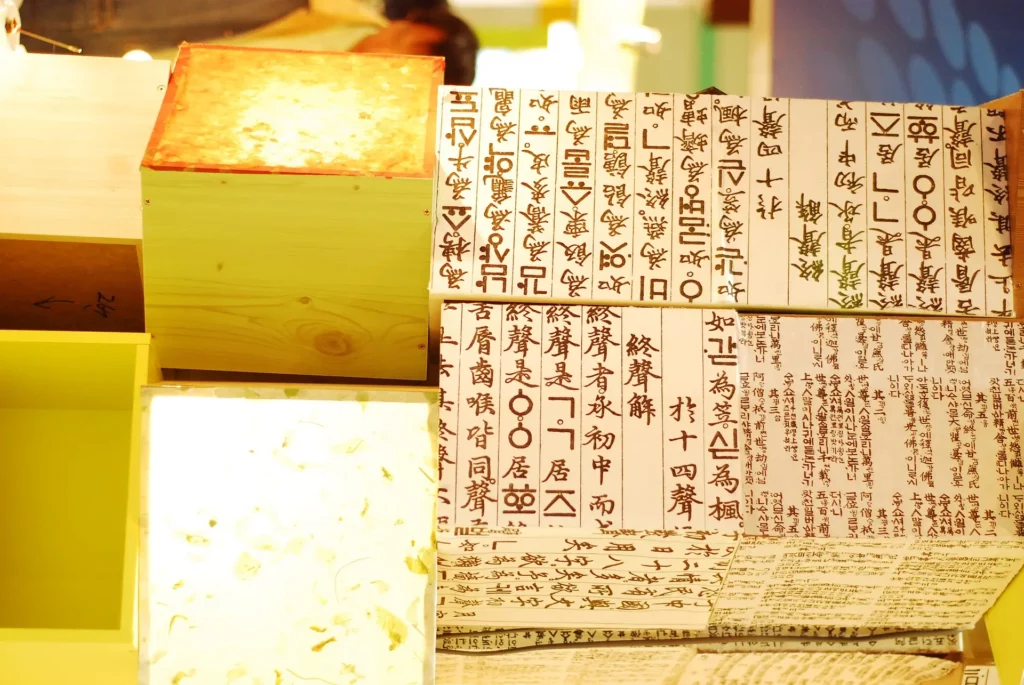
It is officially declared that Hangul was created in 1443, the 25th year of King Sejong’s reign. The astonishing part here is that if the development of Hangul began after he took power, it means the entire writing system was completed in just 25 years.
How could Hangul, with a brilliant system that remains superior even today, be created in just 25 years? While it certainly required King Sejong’s obsession and the immense efforts of the Jiphyeonjeon scholars, this timeline is truly mind-blowing when compared to world characters that evolved over thousands of years. (For instance, the Latin alphabet and Chinese characters took millennia to develop.)
This is where we can truly feel the greatness of Hangul. If it were created in the modern era, it would be considered such a monumental achievement that dozens of Nobel Prizes wouldn’t be enough to reward it.
The Korean language is difficult, but Hangul is easy?
In Western cultures, such as Europe and North America, Chinese, Japanese, and Korean are considered extremely difficult languages to learn. Especially for Korean, foreigners find it highly challenging due to its complex honorifics and ever-changing particles.
However, Hangul is considered one of the easiest writing systems to learn in the world. Since characters can be formed through the harmony of just 14 consonants and 10 vowels, anyone can use it with ease. This has brought about the miracle of reducing the illiteracy rate among Koreans to nearly 0%.
According to Jeong In-ji’s postscript in the Hunminjeongeum Haerye Edition, he confidently states, ‘A wise man can learn it in a single morning, and even a foolish man can learn it within ten days.
Hangul is the only unique phonetic alphabet in the world.

It is said that Hangul was created by mimicking the shape of the vocal organs during pronunciation. In other words, it was designed based on the sounds and how they are made, making it the only writing system of its kind in the world.
To show how amazing this is, almost any sound in the world can be written in Hangul. While Japanese can express around 300 sounds and Chinese about 400, Hangul can represent a staggering 8,000 sounds in writing. Even the Latin alphabet struggles to accurately match and represent sounds.
This is a clear case that proves Hangul is a truly original and creatively designed writing system.
It is a language perfectly tailored for the information and digital age.

ㄱ ㄴ ㄷ ㄹ ㅁ ㅂ ㅅ ㅇ ㅈ ㅊ ㅋ ㅌ ㅍ ㅎ (Consonants (14 Letters))
ㅏ ㅑ ㅓ ㅕ ㅗ ㅛ ㅜ ㅠ ㅡ ㅣ (Vowels (10 Letters))
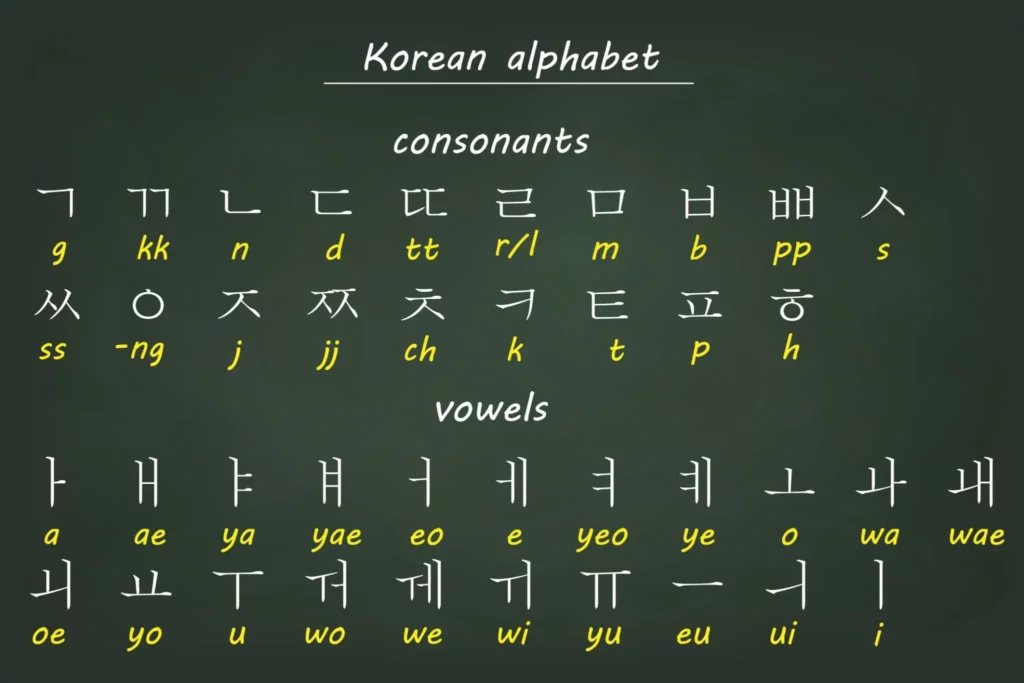
Thanks to these characters, Koreans can send text messages on their mobile phones faster than anyone else in the world. They can also post content on social media services at the highest speed.
In particular, Korean typing on a PC keyboard truly shows its power. It allows for the rapid input of Korean sentences, and document creation efficiency is vastly superior to that of Chinese or Japanese. This is a key reason why Korea has been able to excel in the advancement of IT technology.
Remarkably, meaning can be conveyed online using only consonants. For instance, laughter can be expressed with simple characters like ‘ㅋㅋㅋ’. Because of this, the younger generation and teenagers even send secret messages by combining only consonants, and they can still understand each other perfectly.
Therefore, this is precisely where Hangul unleashes its true power in the information and digital age. It once again proves the superiority of Hangul as a highly efficient, systematic, and scientific writing system.
Did you know that Hangul, which we use every single day, is such an excellent and truly great writing system? As Hangul is evaluated as a magnificent cultural heritage in human history, I hope we preserve and use it well so that it becomes a widely used script by people all over the world in the future. Let’s love Hangul!
You can read the original Korean text at the link below.